
ROAD TUNNEL COVERAGE
RAIL TUNNEL COVERAGE
ROAD/RAIL TUNNEL
OUTDOOR ROAD COVERAGE
NMS
ROAD TUNNEL COVERAGE
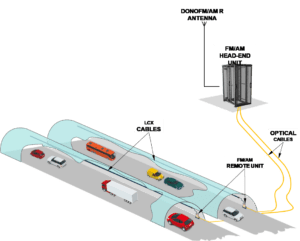 In modern infrastructure, ensuring seamless communication and broadcast signal coverage within road tunnels is critical for safety, convenience, and operational efficiency. This encompasses not only cellular communication but also FM/AM radio signals, which can be vital for providing real-time traffic updates, entertainment, and emergency information.
1. Road Tunnel Coverage:
Road tunnels are often located underground or in areas where traditional signal reception is limited or non-existent due to physical barriers such as concrete and metal. To address this issue, a Distributed Antenna System (DAS) is installed within the tunnel to ensure consistent and reliable coverage for communication and broadcasting.
- Mobile Communication: DAS ensures that mobile network signals (such as 2G, 3G, 4G, and 5G) extend into tunnels, enabling users to make calls, send texts, and use mobile data while traveling through the tunnel.
- Emergency Communication: A reliable DAS system ensures that emergency personnel can stay in contact, and emergency services (such as police, fire, and medical teams) have seamless communication in case of incidents inside the tunnel.
2. FM/AM Coverage Extension in Tunnels:
FM and AM radio signals are traditionally broadcast via radio waves but tend to be blocked or weakened by the tunnel structure. To overcome this, a re-broadcasting system is deployed inside tunnels to ensure that FM and AM radio signals remain strong and clear.
- FM/AM Signal Reception From Portal Buildings: The FM and AM signals are received from portal buildings at both entrances of the tunnel. These portal buildings house the equipment that captures the radio waves from external broadcast sources.
- Re-broadcasting of 6/12 Channels for FM/AM: Once the radio signals are captured, they are re-broadcasted within the tunnel. Typically, up to 6 or 12 channels (depending on system capacity) can be re-broadcasted, providing continuous radio coverage throughout the tunnel. These channels can include public safety announcements, entertainment broadcasts, and real-time traffic updates.
3. Re-broadcasting with Voice Break-In Facility:
A voice break-in facility is an important feature in tunnel communication systems. This feature allows emergency messages or critical communications to “break into” regular broadcasts (FM/AM radio or other media) to ensure that all tunnel users are alerted to important messages such as:
- Emergency Alerts: Traffic incidents, accidents, or safety hazards inside the tunnel or on the road ahead.
- Evacuation Instructions: Information on how to evacuate or take safety precautions in case of a fire, natural disaster, or other emergency.
- Maintenance or Closure Information: Messages regarding road maintenance, detours, or tunnel closures.
This ensures that emergency communications are prioritized and reach all users within the tunnel, even if they are listening to music or non-urgent broadcasts.
4. Back-Up Control Center Facility for Redundancy:
For continuous operation and reliability, a back-up control center facility is critical. This facility serves as a redundant system to ensure that the DAS and broadcasting systems are functional even if there is a failure in the primary control center.
- Redundancy: The back-up control center provides redundancy, meaning if the primary system fails or undergoes maintenance, the back-up system will automatically take over, ensuring uninterrupted service.
- System Monitoring: The control center is responsible for managing the signal distribution, monitoring system performance, and responding to faults or failures in real-time.
This is especially important in road tunnels where safety and communication cannot be compromised.
5. Centralized Monitoring Facility:
A centralized monitoring facility is used to oversee the entire communication and broadcasting system, including mobile signals, FM/AM radio, and emergency communication. This facility is equipped with monitoring tools and dashboards that provide real-time visibility into the system’s performance.
- System Performance: The facility tracks key performance indicators (KPIs) such as signal strength, coverage areas, and system health. Any issues (like signal drops or system malfunctions) are detected and addressed promptly.
- Troubleshooting and Maintenance: Technicians can troubleshoot and perform maintenance remotely from the centralized facility, reducing the need for on-site visits and minimizing downtime.
- Data Analytics: The monitoring system may collect data for analysis, helping operators optimize coverage, detect patterns, and make data-driven decisions for improving service quality.
This ensures a smooth and reliable experience for users and supports emergency response coordination when needed.
In road tunnel infrastructure, ensuring proper mobile communication and FM/AM radio coverage is vital for both everyday use and safety in emergencies. The deployment of Distributed Antenna Systems (DAS), signal reception from portal buildings, and re-broadcasting systems ensures continuous coverage, even in underground or obstructed environments. The inclusion of a voice break-in facility guarantees that critical messages can reach users during emergencies, while the back-up control center and centralized monitoring facility provide redundancy and real-time oversight, ensuring reliable and safe communication throughout the tunnel.
RAIL TUNNEL COVERAGE
 Rail tunnels often face challenges in maintaining effective communication due to their enclosed structure, which can block or weaken traditional radio signals and create interference. Additionally, the high-speed movement of trains and the presence of multiple metallic surfaces can further disrupt signal transmission. A VHF-Simplex Solution is specifically designed to overcome these challenges and ensure reliable and uninterrupted communication in rail tunnels. This solution leverages advanced technologies like leaky coaxial cables, simplex controllers, and robust signal reception mechanisms to provide consistent coverage. It also incorporates redundancy features and centralized monitoring, making it highly dependable in both routine operations and emergency situations. By addressing environmental constraints and operational demands, the VHF-Simplex Solution ensures seamless communication between stations, trains, and control centers, thereby enhancing safety, efficiency, and overall system performance in rail tunnels. Below is an explanation of its key components and features:
1. Signal Reception from Stations:
The communication system captures VHF signals from nearby stations or relay points. This ensures a consistent and strong signal source that can be re-transmitted effectively within the tunnel.
- Coverage Consistency: The system bridges the gap between station transmissions and the tunnel environment, ensuring no signal loss.
- Integration with Station Infrastructure: Signals are seamlessly linked with the station’s existing communication network for uninterrupted service.
2. Built-in Simplex Controller:
The simplex communication setup allows for single-channel communication at a time, either transmitting or receiving.
- Efficiency in Tunnels: The simplex controller ensures smooth communication without interference, which is crucial in confined spaces like tunnels.
- Simplicity: Built-in control mechanisms minimize complexity, making the system more reliable and easy to maintain.
3. Separate LCX Cable for Transmission and Reception:
Leaky Coaxial (LCX) cables are deployed for signal distribution in rail tunnels, with separate cables dedicated to transmitting and receiving signals.
- Clear Signal Quality: The separation prevents interference, ensuring clear and reliable communication.
- Wide Coverage: LCX cables are ideal for maintaining signal strength over long tunnel stretches.
- Durability: These cables are robust, designed to withstand harsh tunnel environments.
4. Support for Star, Daisy, and Ring Connections:
The system supports multiple network topologies, including:
- Star Connection: Each node connects directly to a central hub, ideal for centralized control.
- Daisy Chain Connection: Nodes are connected in a linear sequence, reducing the need for extensive cabling.
- Ring Connection: Nodes form a closed-loop, ensuring redundancy; if one connection fails, the system reroutes communication through an alternate path.
These options offer flexibility based on tunnel layout and operational requirements.
5. Centralized Monitoring Facility:
A centralized monitoring system oversees the entire communication network within the rail tunnel.
- Real-time Performance Tracking: It continuously monitors the health and efficiency of the system, including signal strength and cable performance.
- Fault Detection and Alerts: Automatic alerts are triggered for any faults, enabling swift resolution.
- Remote Management: The facility allows operators to manage and adjust the system remotely, ensuring minimal downtime and streamlined operations.
6. Redundancy Features for Enhanced Reliability:
To ensure uninterrupted communication, redundancy mechanisms can be incorporated into the system.
- Backup LCX Cables: Additional cables can be installed as backups to automatically take over in case of a failure in the primary cables.
- Dual Simplex Controllers: A secondary controller can act as a failover unit to maintain communication during hardware issues.
- Power Redundancy: Backup power supplies, such as uninterruptible power systems (UPS), can keep the system operational during power outages.
7. Integration with Emergency Communication Systems:
The VHF-Simplex Solution can integrate with emergency systems for enhanced safety in critical situations.
- Emergency Announcements: The system can broadcast emergency alerts directly to train operators or passengers during incidents like fires, derailments, or evacuation scenarios.
- SOS Support: Enables train operators or maintenance staff to trigger an SOS signal for rapid response from control centers or rescue teams.
8. Scalability and Expandability:
The system can be designed to grow alongside rail network expansions or technological upgrades.
- Channel Expansion: The solution can support additional VHF channels to accommodate more users or services.
- Future Upgrades: The infrastructure can be adapted for advanced technologies such as LTE/5G integration for broader data communication capabilities.
- Multi-Tunnel Connectivity: It can be extended to interlink multiple tunnels, creating a unified communication network across a larger area.
The VHF-Simplex Solution for rail tunnel coverage is a robust communication system that ensures seamless connectivity for railway operations and safety. By leveraging features such as signal reception from stations, built-in simplex controllers, dedicated LCX cables, flexible network topologies, and centralized monitoring, the system provides efficient, reliable, and easily manageable communication in challenging tunnel environments.
ROAD/RAIL TUNNEL
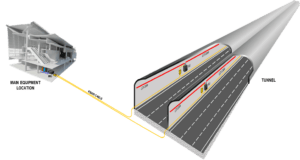 Road and rail tunnels often pose challenges to reliable communication due to their enclosed structure and signal propagation limitations. To address this, specialized systems are implemented to extend Cellular and TETRA (Terrestrial Trunked Radio) coverage within tunnels. These systems are anchored by a centralized equipment room that houses base stations, ensuring streamlined operations and simplified maintenance. High- and medium-power active units are strategically positioned to amplify signals, enabling long-distance coverage across the tunnel. To accommodate diverse communication standards such as 2G, 3G, 4G, 5G, and TETRA, the system supports both single-band and multi-band configurations. A robust optical fiber network connects the master unit to remote units throughout the tunnel, ensuring minimal signal loss and high-speed transmission. Additionally, leaky coaxial (LCX) cables are deployed to provide uniform signal distribution, eliminating coverage gaps. The entire network is monitored through a centralized facility, enabling real-time diagnostics and efficient troubleshooting. This system enhances safety by ensuring uninterrupted communication for passengers, operators, and emergency personnel while optimizing operational efficiency and connectivity in critical transportation infrastructures.
Benefits of Implementing the System in Road and Rail Tunnels
1. Enhanced Safety and Emergency Response:
The system ensures uninterrupted communication within tunnels, a critical feature during emergencies such as fires, accidents, or equipment failures. With centralized monitoring and support for emergency voice break-ins, operators can quickly broadcast safety messages, coordinate evacuation efforts, and guide passengers effectively. This capability significantly reduces response time and enhances the safety of passengers and personnel.
2. Seamless and Uniform Connectivity:
The use of LCX (Leaky Coaxial) cables and optical fiber networks ensures uniform signal strength throughout the tunnel, eliminating dead zones and weak signal areas. This seamless connectivity extends cellular, TETRA, and other communication networks into the tunnel, ensuring passengers and operators can stay connected for calls, data usage, or emergency alerts. The multi-band configuration allows the system to support various technologies like 2G, 3G, 4G, 5G, and TETRA, making it versatile and future-proof.
3. Operational Efficiency and Real-Time Monitoring:
The centralized monitoring facility provides real-time diagnostics and system management. Operators can remotely troubleshoot issues, monitor signal performance, and ensure the system operates at optimal levels. This not only reduces downtime but also ensures efficient operation of tunnel systems, including communication between control centers and on-site teams. High and medium-power active units further ensure long-distance and consistent signal coverage.
4. Durability and Scalability:
Designed to withstand harsh tunnel environments, the system includes weatherproof and vibration-resistant components made from fire-resistant materials. This ensures reliability under extreme conditions, such as moisture, dust, and temperature fluctuations. Additionally, the modular design allows for easy scalability, enabling future upgrades or expansions to accommodate growing communication needs or technological advancements.
5. Enhanced Passenger Experience:
Passengers benefit from uninterrupted cellular and data connectivity, improving their overall travel experience. Whether accessing the internet, making calls, or receiving emergency alerts, the system ensures a reliable connection throughout the journey. This not only improves passenger satisfaction but also fosters trust in the safety and modernity of the infrastructure.
OUTDOOR ROAD COVERAGE
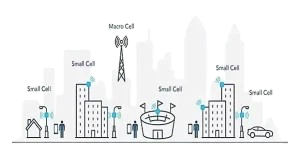 The Fiber Optical Repeater Solution for outdoor road coverage is a cutting-edge system engineered to provide seamless and reliable communication across VHF, UHF, TETRA, and cellular networks. This solution is particularly advantageous for large-scale outdoor environments such as highways, tunnels, remote roads, and critical infrastructure, ensuring uninterrupted communication for safety, operational efficiency, and user connectivity. At its core, the centralized equipment room acts as the operational hub, housing base stations and vital components for streamlined management, reduced maintenance, and enhanced operational efficiency. The system employs direct coupling from the base station, minimizing signal loss and maintaining high-quality, consistent transmission to ensure optimal coverage even in remote or rugged terrains.
One of the standout features is its integration of high and medium-power active units, specifically designed to amplify signals effectively over long distances. These units address challenges such as signal attenuation, ensuring robust and reliable communication across expansive areas. The deployment of an optical fiber network, connecting the master unit to remote repeater units, guarantees high-speed, low-latency signal transmission over vast distances. This not only minimizes signal degradation but also enhances the efficiency of the system, making it ideal for scenarios demanding large-scale outdoor coverage. Furthermore, the system’s support for single to multi-band configurations offers flexibility, enabling simultaneous communication across VHF, UHF, TETRA, and cellular networks to meet diverse communication needs.
To complement these capabilities, the centralized monitoring facility enables real-time oversight and control, allowing operators to quickly identify and resolve performance issues. This feature significantly improves system reliability and ensures consistent service delivery. The solution’s design is tailored to withstand the challenges of outdoor environments, including extreme temperatures, dust, moisture, and vibrations. This rugged construction ensures longevity and dependable operation in even the harshest conditions.
Additional benefits include the reduction of communication dead zones, improved safety for emergency communication systems, and scalability for future network expansions or technology upgrades. The system can also integrate advanced diagnostic tools for predictive maintenance, ensuring minimized downtime and reduced operational costs. By addressing the growing demand for high-performance communication infrastructure, the Fiber Optical Repeater Solution serves as a vital component in modernizing outdoor road networks and enhancing connectivity for a wide range of applications.
NMS
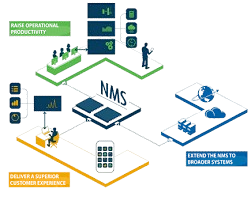 Network Monitoring Software (NMS) is a sophisticated tool designed to provide seamless management, monitoring, and control of communication networks and related infrastructure. The software offers a user-friendly Graphical User Interface (GUI) with an intuitive equipment map, allowing users to visualize the entire network topology and quickly identify connected devices, site configurations, and operational statuses. This visual representation ensures that network management becomes straightforward and efficient, even for complex setups.
The NMS provides robust management features, enabling users to oversee multiple aspects of the system, such as sites, platforms, topology, authority levels, devices, logs, and alarms. It allows centralized control and monitoring, ensuring that network administrators can manage the entire communication ecosystem from a single platform. Advanced features such as alarm handling and dispatch facilitate swift responses to network issues. Alarms are intelligently categorized, prioritized, and dispatched to relevant personnel for timely resolution, minimizing downtime and ensuring system reliability.
User administration is another critical capability, offering secure access rights and role-based control. This ensures that only authorized personnel can access specific parts of the system, enhancing security while maintaining operational flexibility. Comprehensive logs management, which includes alarm logs, user activity logs, and operational logs, provides a detailed record of all events and activities. These logs are essential for diagnostics, troubleshooting, and compliance audits, ensuring transparency and accountability in network operations.
The software is equipped with SNMP traps, enabling seamless integration of alarms into higher-order NMS platforms. This feature supports interoperability and ensures that the system can function as part of a larger network ecosystem. The inclusion of backup and restore functions further enhances system resilience, allowing administrators to safeguard network configurations and restore them quickly in case of disruptions or failures.
In summary, the NMS delivers an all-encompassing solution for monitoring and managing communication networks. Its ease of use, advanced features, and scalability make it an indispensable tool for ensuring the optimal performance, security, and reliability of modern communication systems. Whether deployed for industrial applications, transportation, or emergency communication networks, this software forms the backbone of efficient network management.
In modern infrastructure, ensuring seamless communication and broadcast signal coverage within road tunnels is critical for safety, convenience, and operational efficiency. This encompasses not only cellular communication but also FM/AM radio signals, which can be vital for providing real-time traffic updates, entertainment, and emergency information.
1. Road Tunnel Coverage:
Road tunnels are often located underground or in areas where traditional signal reception is limited or non-existent due to physical barriers such as concrete and metal. To address this issue, a Distributed Antenna System (DAS) is installed within the tunnel to ensure consistent and reliable coverage for communication and broadcasting.
- Mobile Communication: DAS ensures that mobile network signals (such as 2G, 3G, 4G, and 5G) extend into tunnels, enabling users to make calls, send texts, and use mobile data while traveling through the tunnel.
- Emergency Communication: A reliable DAS system ensures that emergency personnel can stay in contact, and emergency services (such as police, fire, and medical teams) have seamless communication in case of incidents inside the tunnel.
2. FM/AM Coverage Extension in Tunnels:
FM and AM radio signals are traditionally broadcast via radio waves but tend to be blocked or weakened by the tunnel structure. To overcome this, a re-broadcasting system is deployed inside tunnels to ensure that FM and AM radio signals remain strong and clear.
- FM/AM Signal Reception From Portal Buildings: The FM and AM signals are received from portal buildings at both entrances of the tunnel. These portal buildings house the equipment that captures the radio waves from external broadcast sources.
- Re-broadcasting of 6/12 Channels for FM/AM: Once the radio signals are captured, they are re-broadcasted within the tunnel. Typically, up to 6 or 12 channels (depending on system capacity) can be re-broadcasted, providing continuous radio coverage throughout the tunnel. These channels can include public safety announcements, entertainment broadcasts, and real-time traffic updates.
3. Re-broadcasting with Voice Break-In Facility:
A voice break-in facility is an important feature in tunnel communication systems. This feature allows emergency messages or critical communications to “break into” regular broadcasts (FM/AM radio or other media) to ensure that all tunnel users are alerted to important messages such as:
- Emergency Alerts: Traffic incidents, accidents, or safety hazards inside the tunnel or on the road ahead.
- Evacuation Instructions: Information on how to evacuate or take safety precautions in case of a fire, natural disaster, or other emergency.
- Maintenance or Closure Information: Messages regarding road maintenance, detours, or tunnel closures.
This ensures that emergency communications are prioritized and reach all users within the tunnel, even if they are listening to music or non-urgent broadcasts.
4. Back-Up Control Center Facility for Redundancy:
For continuous operation and reliability, a back-up control center facility is critical. This facility serves as a redundant system to ensure that the DAS and broadcasting systems are functional even if there is a failure in the primary control center.
- Redundancy: The back-up control center provides redundancy, meaning if the primary system fails or undergoes maintenance, the back-up system will automatically take over, ensuring uninterrupted service.
- System Monitoring: The control center is responsible for managing the signal distribution, monitoring system performance, and responding to faults or failures in real-time.
This is especially important in road tunnels where safety and communication cannot be compromised.
5. Centralized Monitoring Facility:
A centralized monitoring facility is used to oversee the entire communication and broadcasting system, including mobile signals, FM/AM radio, and emergency communication. This facility is equipped with monitoring tools and dashboards that provide real-time visibility into the system’s performance.
- System Performance: The facility tracks key performance indicators (KPIs) such as signal strength, coverage areas, and system health. Any issues (like signal drops or system malfunctions) are detected and addressed promptly.
- Troubleshooting and Maintenance: Technicians can troubleshoot and perform maintenance remotely from the centralized facility, reducing the need for on-site visits and minimizing downtime.
- Data Analytics: The monitoring system may collect data for analysis, helping operators optimize coverage, detect patterns, and make data-driven decisions for improving service quality.
This ensures a smooth and reliable experience for users and supports emergency response coordination when needed.
In road tunnel infrastructure, ensuring proper mobile communication and FM/AM radio coverage is vital for both everyday use and safety in emergencies. The deployment of Distributed Antenna Systems (DAS), signal reception from portal buildings, and re-broadcasting systems ensures continuous coverage, even in underground or obstructed environments. The inclusion of a voice break-in facility guarantees that critical messages can reach users during emergencies, while the back-up control center and centralized monitoring facility provide redundancy and real-time oversight, ensuring reliable and safe communication throughout the tunnel.
Rail tunnels often face challenges in maintaining effective communication due to their enclosed structure, which can block or weaken traditional radio signals and create interference. Additionally, the high-speed movement of trains and the presence of multiple metallic surfaces can further disrupt signal transmission. A VHF-Simplex Solution is specifically designed to overcome these challenges and ensure reliable and uninterrupted communication in rail tunnels. This solution leverages advanced technologies like leaky coaxial cables, simplex controllers, and robust signal reception mechanisms to provide consistent coverage. It also incorporates redundancy features and centralized monitoring, making it highly dependable in both routine operations and emergency situations. By addressing environmental constraints and operational demands, the VHF-Simplex Solution ensures seamless communication between stations, trains, and control centers, thereby enhancing safety, efficiency, and overall system performance in rail tunnels. Below is an explanation of its key components and features:
1. Signal Reception from Stations:
The communication system captures VHF signals from nearby stations or relay points. This ensures a consistent and strong signal source that can be re-transmitted effectively within the tunnel.
- Coverage Consistency: The system bridges the gap between station transmissions and the tunnel environment, ensuring no signal loss.
- Integration with Station Infrastructure: Signals are seamlessly linked with the station’s existing communication network for uninterrupted service.
2. Built-in Simplex Controller:
The simplex communication setup allows for single-channel communication at a time, either transmitting or receiving.
- Efficiency in Tunnels: The simplex controller ensures smooth communication without interference, which is crucial in confined spaces like tunnels.
- Simplicity: Built-in control mechanisms minimize complexity, making the system more reliable and easy to maintain.
3. Separate LCX Cable for Transmission and Reception:
Leaky Coaxial (LCX) cables are deployed for signal distribution in rail tunnels, with separate cables dedicated to transmitting and receiving signals.
- Clear Signal Quality: The separation prevents interference, ensuring clear and reliable communication.
- Wide Coverage: LCX cables are ideal for maintaining signal strength over long tunnel stretches.
- Durability: These cables are robust, designed to withstand harsh tunnel environments.
4. Support for Star, Daisy, and Ring Connections:
The system supports multiple network topologies, including:
- Star Connection: Each node connects directly to a central hub, ideal for centralized control.
- Daisy Chain Connection: Nodes are connected in a linear sequence, reducing the need for extensive cabling.
- Ring Connection: Nodes form a closed-loop, ensuring redundancy; if one connection fails, the system reroutes communication through an alternate path.
These options offer flexibility based on tunnel layout and operational requirements.
5. Centralized Monitoring Facility:
A centralized monitoring system oversees the entire communication network within the rail tunnel.
- Real-time Performance Tracking: It continuously monitors the health and efficiency of the system, including signal strength and cable performance.
- Fault Detection and Alerts: Automatic alerts are triggered for any faults, enabling swift resolution.
- Remote Management: The facility allows operators to manage and adjust the system remotely, ensuring minimal downtime and streamlined operations.
6. Redundancy Features for Enhanced Reliability:
To ensure uninterrupted communication, redundancy mechanisms can be incorporated into the system.
- Backup LCX Cables: Additional cables can be installed as backups to automatically take over in case of a failure in the primary cables.
- Dual Simplex Controllers: A secondary controller can act as a failover unit to maintain communication during hardware issues.
- Power Redundancy: Backup power supplies, such as uninterruptible power systems (UPS), can keep the system operational during power outages.
7. Integration with Emergency Communication Systems:
The VHF-Simplex Solution can integrate with emergency systems for enhanced safety in critical situations.
- Emergency Announcements: The system can broadcast emergency alerts directly to train operators or passengers during incidents like fires, derailments, or evacuation scenarios.
- SOS Support: Enables train operators or maintenance staff to trigger an SOS signal for rapid response from control centers or rescue teams.
8. Scalability and Expandability:
The system can be designed to grow alongside rail network expansions or technological upgrades.
- Channel Expansion: The solution can support additional VHF channels to accommodate more users or services.
- Future Upgrades: The infrastructure can be adapted for advanced technologies such as LTE/5G integration for broader data communication capabilities.
- Multi-Tunnel Connectivity: It can be extended to interlink multiple tunnels, creating a unified communication network across a larger area.
The VHF-Simplex Solution for rail tunnel coverage is a robust communication system that ensures seamless connectivity for railway operations and safety. By leveraging features such as signal reception from stations, built-in simplex controllers, dedicated LCX cables, flexible network topologies, and centralized monitoring, the system provides efficient, reliable, and easily manageable communication in challenging tunnel environments.
Road and rail tunnels often pose challenges to reliable communication due to their enclosed structure and signal propagation limitations. To address this, specialized systems are implemented to extend Cellular and TETRA (Terrestrial Trunked Radio) coverage within tunnels. These systems are anchored by a centralized equipment room that houses base stations, ensuring streamlined operations and simplified maintenance. High- and medium-power active units are strategically positioned to amplify signals, enabling long-distance coverage across the tunnel. To accommodate diverse communication standards such as 2G, 3G, 4G, 5G, and TETRA, the system supports both single-band and multi-band configurations. A robust optical fiber network connects the master unit to remote units throughout the tunnel, ensuring minimal signal loss and high-speed transmission. Additionally, leaky coaxial (LCX) cables are deployed to provide uniform signal distribution, eliminating coverage gaps. The entire network is monitored through a centralized facility, enabling real-time diagnostics and efficient troubleshooting. This system enhances safety by ensuring uninterrupted communication for passengers, operators, and emergency personnel while optimizing operational efficiency and connectivity in critical transportation infrastructures.
Benefits of Implementing the System in Road and Rail Tunnels
1. Enhanced Safety and Emergency Response:
The system ensures uninterrupted communication within tunnels, a critical feature during emergencies such as fires, accidents, or equipment failures. With centralized monitoring and support for emergency voice break-ins, operators can quickly broadcast safety messages, coordinate evacuation efforts, and guide passengers effectively. This capability significantly reduces response time and enhances the safety of passengers and personnel.
2. Seamless and Uniform Connectivity:
The use of LCX (Leaky Coaxial) cables and optical fiber networks ensures uniform signal strength throughout the tunnel, eliminating dead zones and weak signal areas. This seamless connectivity extends cellular, TETRA, and other communication networks into the tunnel, ensuring passengers and operators can stay connected for calls, data usage, or emergency alerts. The multi-band configuration allows the system to support various technologies like 2G, 3G, 4G, 5G, and TETRA, making it versatile and future-proof.
3. Operational Efficiency and Real-Time Monitoring:
The centralized monitoring facility provides real-time diagnostics and system management. Operators can remotely troubleshoot issues, monitor signal performance, and ensure the system operates at optimal levels. This not only reduces downtime but also ensures efficient operation of tunnel systems, including communication between control centers and on-site teams. High and medium-power active units further ensure long-distance and consistent signal coverage.
4. Durability and Scalability:
Designed to withstand harsh tunnel environments, the system includes weatherproof and vibration-resistant components made from fire-resistant materials. This ensures reliability under extreme conditions, such as moisture, dust, and temperature fluctuations. Additionally, the modular design allows for easy scalability, enabling future upgrades or expansions to accommodate growing communication needs or technological advancements.
5. Enhanced Passenger Experience:
Passengers benefit from uninterrupted cellular and data connectivity, improving their overall travel experience. Whether accessing the internet, making calls, or receiving emergency alerts, the system ensures a reliable connection throughout the journey. This not only improves passenger satisfaction but also fosters trust in the safety and modernity of the infrastructure.
The Fiber Optical Repeater Solution for outdoor road coverage is a cutting-edge system engineered to provide seamless and reliable communication across VHF, UHF, TETRA, and cellular networks. This solution is particularly advantageous for large-scale outdoor environments such as highways, tunnels, remote roads, and critical infrastructure, ensuring uninterrupted communication for safety, operational efficiency, and user connectivity. At its core, the centralized equipment room acts as the operational hub, housing base stations and vital components for streamlined management, reduced maintenance, and enhanced operational efficiency. The system employs direct coupling from the base station, minimizing signal loss and maintaining high-quality, consistent transmission to ensure optimal coverage even in remote or rugged terrains.
One of the standout features is its integration of high and medium-power active units, specifically designed to amplify signals effectively over long distances. These units address challenges such as signal attenuation, ensuring robust and reliable communication across expansive areas. The deployment of an optical fiber network, connecting the master unit to remote repeater units, guarantees high-speed, low-latency signal transmission over vast distances. This not only minimizes signal degradation but also enhances the efficiency of the system, making it ideal for scenarios demanding large-scale outdoor coverage. Furthermore, the system’s support for single to multi-band configurations offers flexibility, enabling simultaneous communication across VHF, UHF, TETRA, and cellular networks to meet diverse communication needs.
To complement these capabilities, the centralized monitoring facility enables real-time oversight and control, allowing operators to quickly identify and resolve performance issues. This feature significantly improves system reliability and ensures consistent service delivery. The solution’s design is tailored to withstand the challenges of outdoor environments, including extreme temperatures, dust, moisture, and vibrations. This rugged construction ensures longevity and dependable operation in even the harshest conditions.
Additional benefits include the reduction of communication dead zones, improved safety for emergency communication systems, and scalability for future network expansions or technology upgrades. The system can also integrate advanced diagnostic tools for predictive maintenance, ensuring minimized downtime and reduced operational costs. By addressing the growing demand for high-performance communication infrastructure, the Fiber Optical Repeater Solution serves as a vital component in modernizing outdoor road networks and enhancing connectivity for a wide range of applications.
Network Monitoring Software (NMS) is a sophisticated tool designed to provide seamless management, monitoring, and control of communication networks and related infrastructure. The software offers a user-friendly Graphical User Interface (GUI) with an intuitive equipment map, allowing users to visualize the entire network topology and quickly identify connected devices, site configurations, and operational statuses. This visual representation ensures that network management becomes straightforward and efficient, even for complex setups.
The NMS provides robust management features, enabling users to oversee multiple aspects of the system, such as sites, platforms, topology, authority levels, devices, logs, and alarms. It allows centralized control and monitoring, ensuring that network administrators can manage the entire communication ecosystem from a single platform. Advanced features such as alarm handling and dispatch facilitate swift responses to network issues. Alarms are intelligently categorized, prioritized, and dispatched to relevant personnel for timely resolution, minimizing downtime and ensuring system reliability.
User administration is another critical capability, offering secure access rights and role-based control. This ensures that only authorized personnel can access specific parts of the system, enhancing security while maintaining operational flexibility. Comprehensive logs management, which includes alarm logs, user activity logs, and operational logs, provides a detailed record of all events and activities. These logs are essential for diagnostics, troubleshooting, and compliance audits, ensuring transparency and accountability in network operations.
The software is equipped with SNMP traps, enabling seamless integration of alarms into higher-order NMS platforms. This feature supports interoperability and ensures that the system can function as part of a larger network ecosystem. The inclusion of backup and restore functions further enhances system resilience, allowing administrators to safeguard network configurations and restore them quickly in case of disruptions or failures.
In summary, the NMS delivers an all-encompassing solution for monitoring and managing communication networks. Its ease of use, advanced features, and scalability make it an indispensable tool for ensuring the optimal performance, security, and reliability of modern communication systems. Whether deployed for industrial applications, transportation, or emergency communication networks, this software forms the backbone of efficient network management.