Cellcomm Solutions


Transforming Indoor Coverage with
Next-Gen DAS and IBS Technology!

IBS (In-Building Solutions) and DAS (Distributed Antenna Systems) are crucial technologies designed to enhance and distribute wireless signal coverage within buildings, tunnels, large infrastructures, or underground facilities where traditional signal sources (such as cell towers or radio transmitters) might not be able to penetrate due to physical barriers. These systems ensure that communication signals, including mobile networks, radio signals (FM/AM), and emergency services, remain strong and reliable inside environments with poor or no direct reception.

What is IBS/DAS?

  • In-Building Solutions (IBS) is a broad term used for technologies and strategies that provide enhanced wireless connectivity inside large structures. It refers to a range of solutions, including antennas, repeaters, signal boosters, and other hardware that ensures that mobile signals, radio communications, Wi-Fi, and other wireless technologies work efficiently within a building or facility.
  • Distributed Antenna System (DAS) is one of the most common and effective types of IBS. It involves a network of antennas distributed throughout the building, connected to a central system or signal source (like a base station or cell tower). The antennas serve to capture and amplify signals from outside sources and re-broadcast them to ensure seamless connectivity across the entire indoor area.

How Does IBS/DAS Work?

The system works by utilizing a combination of antennas, cables, repeaters, and signal boosters to distribute wireless communication signals throughout an indoor environment, overcoming obstacles such as concrete walls, steel frames, and other materials that block or weaken signals. Here’s how the technology operates:

  • Signal Source: The IBS/DAS system begins with a signal source (either a mobile network, FM/AM radio station, or Wi-Fi access point) located outside the building or facility.
  • Signal Reception and Distribution: Antennas located outside the building (in nearby towers, radio stations, or communication hubs) transmit signals to the interior of the building via coaxial cables, fiber optics, or other transmission media.
  • Amplification and Re-broadcasting: Once the signals are inside the building, they are amplified by repeaters or boosters and transmitted to antennas located at different points throughout the interior. These antennas distribute the signal evenly across the building or structure to ensure continuous reception.
  • Centralized Control System: A central control unit manages the system, overseeing signal strength, performance, and troubleshooting. This allows operators to monitor and optimize the network for maximum efficiency.

Benefits of IBS/DAS

  • Enhanced Coverage: The primary benefit of IBS/DAS is that it ensures full coverage within buildings or structures where traditional signals cannot reach. This eliminates dead spots where users might experience poor reception.
  • Improved Safety: With reliable communication systems in place, emergency personnel, workers, and building occupants can stay connected during critical situations. Public address systems and emergency messaging can also be broadcast seamlessly across large areas.
  • Capacity and Scalability: DAS systems can handle higher capacity and more users in a single building. They are scalable and can be expanded to accommodate growing demand as buildings and facilities expand.
  • Improved User Experience: Visitors, employees, and residents in buildings benefit from seamless connectivity for mobile networks, Wi-Fi, and other communication services. This enhances the overall user experience, making the building more attractive and functional.
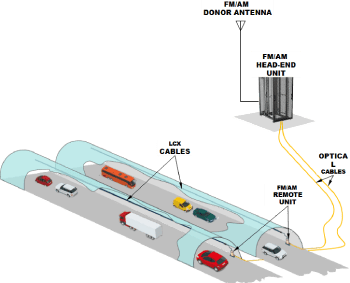
FM/AM COVERAGE EXTENSION
  • Signal Reception From Portal Buildings
  • Re-broadcasting of 6/12 Channels For AM/FM
  • Re-broadcasting With Voice Break-in Facility
  • Back-up Control Center Facility For Redundancy
  • Centralized Monitoring Facility
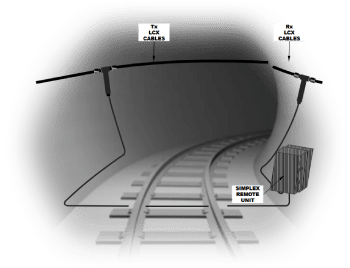
VHF – SIMPLEX SOLUTION FOR RAIL TUNNEL
  • Signal Reception From Stations
  • Built-in Simplex Controller
  • Separate LCX Cable For Transmission & Reception
  • Support Star/Daisy/Ring Connections
  • Centralized Monitoring Facility
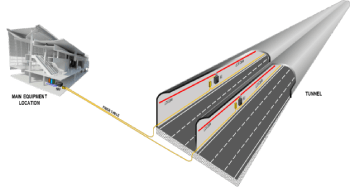
CELLULAR & TETRA COVERAGE EXTENTION
  • Centralized Equipment Room For Base Stations
  • High/Medium Power Active Units For Long Distance Coverage
  • Single to Multi Band Configurations
  • Optical Fiber Network From Master to Remote Unit
  • LCX Cable For Uniform Coverage
  • Centralized Monitoring Facility

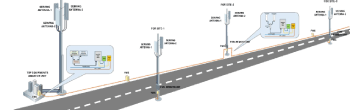
FIBER OPTICAL REPEATER SOLUTION FOR VHF/UHF/TETRA/CELLULAR
  • Centralized Equipment Room for Base Stations
  • Direct Coupling From Base Station
  • High/Medium Power Active Units For Long Distance Coverage
  • Optical Fiber Network From Master to Remote Unit
  • Single to Multi Band Configurations
  • Centralized Monitoring Facility

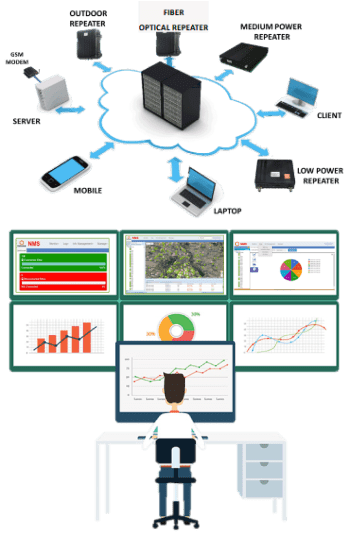
NETWORK MONITORING SOFTWARE
  • User-friendly GUI with Equipment Map
  • Management – Site, Platform, Topology, Authority, Device, Log & Alarm
  • Alarm Handling and Dispatch
  • User Administration with Access Rights
  • Logs Management (Alarm, User, Operation…).
  • SNMP Traps For Integrating the Alarms to Higher Order NMS
  • Backup and Restore Function
Translate »