
SMART POLE
WEATHER MONITORING
TELECOM SHELTER
SOLAR RAIN GAUGE
SERVER ROOM
BATTERY HEALTH
SMART POLE
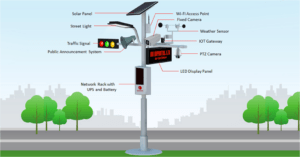 Key Features of a Smart Pole
- Smart & Energy Efficient LED Lighting
- Solar Powered
- Hybrid Energy Source
- Wi-Fi Access Point
- Surveillance System
- MET & Enviro Sensors
- Digital Billboard
- DCU and Power Management
- Charging Station
- Public Announcement System
WEATHER MONITORING
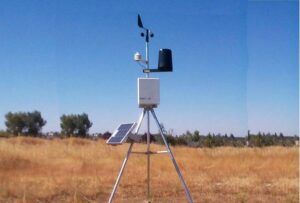 The Weather Monitoring System is an advanced, solar-powered solution that offers an effective and eco-friendly way to monitor environmental conditions in real-time. This system is specifically designed for outdoor applications, making it robust enough to handle a variety of challenging weather conditions, ensuring uninterrupted performance even in remote areas where access to power grids might be limited. Powered by solar energy, the system provides a sustainable and cost-effective operation, reducing dependence on conventional power sources.
One of the standout features of this system is its ability to easily integrate a wide range of environmental sensors. This allows for comprehensive monitoring of various atmospheric conditions, such as temperature, humidity, wind speed, wind direction, solar radiation, air pressure, and more. These sensors are critical for gaining accurate data to understand weather patterns, climate change, and environmental conditions, which can be invaluable for agricultural, research, or disaster management applications.
To ensure data availability and flexibility, the system supports local and cloud-based data storage. The local storage provides immediate access to historical data stored on the system, while the cloud storage enables secure off-site storage and easy remote access. Cloud integration also allows for data sharing, analysis, and long-term storage, making it possible to track and compare weather trends over extended periods. Additionally, the cloud-based data can be securely accessed from anywhere, making it ideal for users managing multiple sites or requiring real-time monitoring.
The system comes with a user-friendly web interface, allowing users to monitor the environmental conditions from anywhere with internet access. This intuitive interface enables easy configuration and management of the system, making it accessible even for non-technical users. It provides a dashboard displaying real-time data and historical trends in various graphical formats, facilitating quick decision-making based on up-to-date information.
Analytical reports are automatically generated by the system, offering detailed insights into weather patterns, anomalies, and trends. These reports can be customized based on user preferences and can be used to analyze long-term weather behavior, helping businesses, researchers, or government agencies to make informed decisions. The system also supports advanced analytics such as forecasting, pattern recognition, and climate modeling.
Another key feature is the escalated alerts system, which sends real-time notifications and alerts whenever environmental conditions cross predefined thresholds. These alerts can be crucial for triggering action in the event of extreme weather events, such as heavy rainfall, temperature extremes, or high wind speeds. Users can receive these alerts via various channels, including email, SMS, or push notifications, ensuring that the right people are informed promptly.
The system’s remote configuration capability via SMS or GPRS provides added convenience. Users can change settings, adjust parameters, or troubleshoot the system remotely without having to visit the physical site. This makes the system highly flexible and reduces the need for frequent on-site maintenance.
Lastly, the system allows for customizable data capture and acquisition intervals, allowing users to define how frequently the system captures and stores data. Depending on the application, users can set the system to record data in short intervals for real-time monitoring or at longer intervals for periodic reports. This level of flexibility ensures that the system can be tailored to suit different needs, whether for high-frequency weather monitoring or long-term trend analysis.
In summary, the Weather Monitoring System is a comprehensive, highly adaptable, and reliable solution for capturing environmental data. Its combination of solar power, advanced sensors, cloud integration, and remote management capabilities makes it ideal for a wide range of outdoor applications, from agricultural monitoring and climate research to disaster management and environmental monitoring.
TELECOM SHELTER
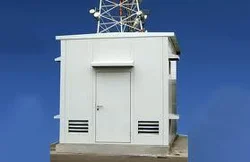 The Telecom Shelter Monitoring System is an advanced solution designed to ensure the smooth operation of telecom facilities by monitoring critical environmental and operational parameters. It focuses on tracking temperature and humidity levels, which are crucial for maintaining the optimal functioning of sensitive equipment inside telecom shelters. By continuously logging these parameters, the system helps prevent damage caused by extreme temperature or moisture fluctuations, ensuring that equipment remains in peak condition.
Benefits
The Telecom Shelter Monitoring System offers several key benefits that enhance the operational efficiency and reliability of telecom infrastructure:
1. Optimal Environmental Control: Continuous monitoring of temperature and humidity ensures that telecom equipment operates within the optimal environmental conditions. This prevents equipment malfunction due to temperature extremes or excess moisture, reducing the risk of downtime and costly repairs.
2. Proactive Issue Detection: The system tracks the health of all machinery 24/7, enabling early detection of potential issues such as equipment wear or performance degradation. By identifying problems before they escalate, it helps minimize unexpected breakdowns and extends the lifespan of expensive telecom equipment.
3. Real-Time Alerts: The system’s real-time alerts for server downtime and power outages enable immediate response and intervention. Operators are promptly notified, allowing them to take swift action and reduce the duration of service disruptions, ensuring higher uptime and improved reliability of telecom services.
4. Preventive Maintenance: By continuously monitoring equipment health and environmental conditions, the system supports preventive maintenance practices. Regular maintenance can be scheduled based on the system’s insights, preventing costly repairs and unplanned downtime while optimizing the performance of machinery.
5. Remote Monitoring and Data Access: The ability to access data on demand means that operators can monitor shelter conditions remotely, ensuring that the telecom infrastructure is being managed effectively without the need for constant physical presence. This increases convenience and reduces operational costs associated with on-site visits.
6. Enhanced Decision-Making: The system provides real-time and historical data, enabling operators and maintenance teams to make data-driven decisions. This access to actionable insights supports long-term planning and resource management, helping businesses optimize their operations.
7. Improved Reliability and Uptime: The combination of temperature/humidity control, machinery health tracking, and real-time alerts ensures that telecom shelters operate reliably, reducing downtime and service interruptions. This improves the overall uptime of telecom services, which is crucial for maintaining customer satisfaction and service quality.
8. Cost Savings: By preventing equipment failures and downtime, the system helps reduce repair costs, emergency fixes, and unplanned service interruptions. Preventive maintenance, coupled with early issue detection, results in lower overall operational costs over time.
The Telecom Shelter Monitoring System enhances the reliability, efficiency, and cost-effectiveness of telecom infrastructure, while supporting proactive maintenance and improving the overall management of telecom shelters.
SOLAR RAIN GAUGE
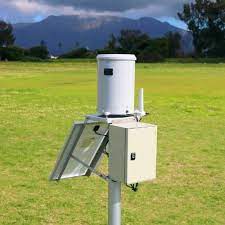 The Solar Rain Gauge is an advanced weather monitoring tool designed to accurately measure and record rainfall levels while operating sustainably through solar power. It combines environmental monitoring capabilities with solar energy, offering a reliable, cost-effective, and eco-friendly solution for rain measurement in remote or off-grid locations.
Benefits of Solar Rain Gauge:
The Solar Rain Gauge offers several key benefits that enhance its usability, reliability, and sustainability in monitoring rainfall and environmental conditions:
1. Sustainable Operation: Being solar-powered, the system operates independently of the electrical grid, making it ideal for remote or off-grid locations. This reduces operating costs and ensures continuous operation without the need for external power sources, promoting environmental sustainability.
2. Accurate Data Logging: In addition to measuring rainfall, the system logs temperature and humidity, providing a comprehensive view of environmental conditions. This accurate data can be used for weather forecasting, climate studies, agriculture planning, and other applications requiring precise climate data.
3. Real-Time Monitoring: The ability to monitor rainfall and environmental conditions in real-time allows users to make quick decisions based on up-to-date information. Whether for flood management, irrigation planning, or research, real-time data ensures timely actions in response to weather changes.
4. Remote Access & Data Storage: The system stores data both locally and in the cloud, offering secure backup and remote access. This dual storage option ensures data integrity, provides easy access from anywhere, and allows for long-term tracking and analysis of weather trends.
5. User-friendly Interface: The web interface is designed to be simple and intuitive, making it easy for users of all technical backgrounds to operate. Real-time data, historical records, and system settings are accessible at the click of a button, streamlining monitoring and management.
6. Escalated Alerts: The system can be configured to send alerts when certain thresholds (e.g., heavy rainfall or temperature extremes) are exceeded. These escalated alerts allow for proactive responses, helping in flood prevention, disaster management, or agricultural planning.
7. Cost-Effective: By eliminating the need for external power sources and reducing maintenance costs, the Solar Rain Gauge is a cost-effective solution for long-term environmental monitoring. The savings on energy consumption and infrastructure make it ideal for large-scale deployment.
8. Remote Configuration and Management: Users can remotely configure the system via SMS or GPRS, offering flexibility and convenience. This capability reduces the need for on-site visits and makes system management more efficient, especially in hard-to-reach areas.
9. Durable and Reliable: Built to withstand outdoor conditions, the Solar Rain Gauge is durable and reliable, making it a great option for long-term monitoring in challenging environments. Its robust design ensures consistent performance regardless of weather conditions.
10. Flexible Applications: Whether for agriculture, hydrology, environmental monitoring, or weather research, the Solar Rain Gauge is a versatile tool that can be adapted to a wide range of industries. Its scalability and adaptability make it suitable for both small and large-scale projects.
In summary, the Solar Rain Gauge is a versatile and eco-friendly solution for monitoring rainfall and environmental conditions. With solar power, real-time monitoring, local and cloud storage, a user-friendly web interface, and remote configuration capabilities, this system provides an efficient and reliable way to track rainfall and related parameters in various outdoor applications.
SERVER ROOM
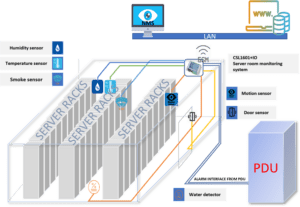 The Server Room Monitoring System is a comprehensive solution designed to ensure the optimal operation and security of critical infrastructure in server rooms, data centers, or IT facilities. This system offers a range of monitoring features to safeguard sensitive equipment and ensure continuous, reliable performance.
Benefits:
- Enhanced Security: Continuous monitoring of environmental factors like temperature, humidity, smoke, and water presence protects sensitive equipment and ensures its proper functioning.
- Proactive Problem Detection: Early detection of power outages, equipment failure, or fire hazards minimizes potential risks and downtime.
- Remote Accessibility: Web-based and mobile app access makes it easy to monitor the server room from anywhere, allowing quick responses to any issues.
- Redundancy and Reliability: Dual SIM support for data communication ensures that the monitoring system remains operational even in the event of network issues.
- Asset Management: RFID-based asset tracking streamlines inventory and helps ensure that all equipment is accounted for and properly maintained.
In summary, the Server Room Monitoring System provides a comprehensive, reliable, and efficient way to monitor and protect critical infrastructure. With features like temperature and humidity tracking, power outage detection, fire and smoke monitoring, equipment failure alerts, and asset tracking, it ensures the safe, continuous operation of your server room and data center.
BATTERY HEALTH
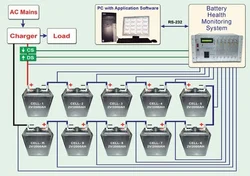 The Battery Health Monitoring System is a comprehensive solution designed to continuously monitor and assess the performance and condition of batteries, ensuring their optimal functionality and extending their lifespan. One of the primary features of this system is the monitoring of battery voltage, which tracks whether the voltage levels are within the acceptable range. Additionally, the system checks for ripple voltage, which refers to fluctuations or variations in voltage. These fluctuations can impact the performance of batteries and reduce their efficiency over time, so monitoring ripple voltage is essential for detecting power quality issues that could lead to degradation or failure. The system also tracks the impedance of each individual battery, which is a measure of internal resistance that increases as a battery ages or undergoes wear. By monitoring impedance, the system can identify aging or faulty batteries early, allowing for timely maintenance or replacement, thus preventing unexpected failures and improving overall reliability.
Benefits
The Battery Health Monitoring System offers several substantial benefits that directly contribute to improved operational efficiency, safety, and cost-effectiveness in battery management.
Proactive Maintenance: Continuous monitoring of critical parameters such as voltage, impedance, temperature, and environmental conditions provides early insights into potential problems. By identifying issues like aging batteries, temperature extremes, or voltage fluctuations at an early stage, the system allows for timely intervention before these issues escalate into major failures. This proactive approach helps in avoiding emergency repairs or replacements, ensuring that the system operates without unexpected interruptions. Moreover, it allows maintenance teams to schedule repairs or replacements during planned downtime, preventing unplanned outages and minimizing service disruption.
Increased Battery Lifespan: Batteries, especially in complex systems like UPS or energy storage, can degrade over time due to improper environmental conditions, temperature extremes, or internal resistance. By maintaining optimal conditions for each individual battery and the overall battery string, the monitoring system ensures that each component operates at peak performance. For example, by regulating the temperature and humidity levels and ensuring that each battery is charged and discharged properly, the system can significantly extend the lifespan of the batteries. This ensures that the batteries remain efficient for a longer period, reducing the frequency of replacements and lowering long-term maintenance costs.
Enhanced Safety: Battery systems, particularly those in critical applications, can pose safety risks if not properly maintained. Overheating, short-circuiting, or internal imbalances can result in dangerous conditions like thermal runaway, fires, or even explosions. The Battery Health Monitoring System helps mitigate these risks by constantly tracking battery temperature, voltage fluctuations, and other key metrics that could indicate a potential safety hazard. Early detection of abnormal conditions allows for immediate corrective action, thus enhancing the safety of both the facility and personnel. For example, if a battery reaches an unsafe temperature or shows signs of malfunction, the system can trigger an alert, allowing operators to shut down or adjust the system before a hazardous event occurs.
Optimized Performance: A battery system’s performance depends on the efficient operation of all individual batteries within the string. Imbalances in battery voltage or current can lead to reduced performance and decreased reliability of the system. The Battery Health Monitoring System continuously checks string voltage, current, and impedance to ensure that all batteries are functioning optimally. This ensures a stable and consistent energy output, contributing to overall system reliability. By maintaining the proper balance and performance of each battery in the string, the system ensures that energy delivery is uninterrupted, reducing the risk of system failure due to one faulty battery affecting the entire network.
Reduced Downtime and Costs: Battery failures, particularly those that go unnoticed until an issue arises, can result in costly repairs, unplanned maintenance, or emergency replacements. The Battery Health Monitoring System helps reduce these occurrences by providing real-time alerts on potential failures. By identifying problems early, such as increased impedance or unusual temperature readings, the system helps prevent costly unplanned downtime and reduces the need for expensive emergency replacements. Additionally, by extending the time between battery replacements through optimized monitoring and maintenance, the system reduces the total cost of ownership over time.
Cost-Effective: Regular monitoring and early detection of battery issues lead to significant cost savings. Proactive maintenance ensures that expensive repairs and replacements are only done when necessary, preventing unnecessary interventions. By maintaining each battery at its optimal performance level, the system reduces the overall operational and replacement costs. Furthermore, fewer unplanned failures translate into fewer service interruptions, helping to improve overall productivity and reliability, which is especially important in mission-critical environments.
Increased System Efficiency: By providing detailed insights into each battery’s condition, the system enables more efficient energy use. Batteries that are performing optimally are more efficient at storing and releasing energy, which directly impacts the overall system’s energy efficiency. The system can identify batteries that are underperforming or failing and recommend adjustments, ensuring the highest level of efficiency in energy usage and storage.
In conclusion, the Battery Health Monitoring System offers an invaluable tool for managing the health and performance of battery systems. By continuously tracking critical parameters such as voltage, impedance, temperature, and environmental factors, the system ensures that batteries operate at peak efficiency, safety, and longevity. This comprehensive monitoring helps reduce maintenance costs, prevents unplanned downtime, extends the life of batteries, and enhances overall system reliability. The benefits of proactive maintenance, enhanced safety, optimized performance, and cost savings make this system a vital investment for any operation relying on battery-powered systems.
A Smart Pole is an innovative IoT-enabled infrastructure designed to enhance urban functionality, sustainability, and connectivity. It integrates multiple smart technologies into a single structure, transforming traditional streetlights into multifunctional hubs for modern cities. Below is a detailed explanation of its key features and benefits:
Key Features of a Smart Pole
1. Smart & Energy-Efficient LED Lighting:
- Equipped with intelligent lighting systems that adjust brightness based on motion detection, time of day, or ambient light levels.
- Reduces energy consumption and light pollution while improving urban safety.
2. Solar Powered with Hybrid Energy Source:
- Incorporates solar panels to utilize renewable energy for power.
- Hybrid energy systems ensure continuous functionality during low sunlight or high-demand periods.
3. Wi-Fi Access Point:
- Provides public wireless internet connectivity.
- Bridges the digital divide by offering free or paid internet access in public spaces.
4. Surveillance System:
- Integrates high-definition cameras for real-time monitoring and recording.
- Enhances security in public areas, aiding in crime prevention and emergency response.
5. MET & Environmental Sensors:
- Tracks weather conditions, air quality, noise levels, and other environmental parameters.
- Helps city planners make informed decisions and improves public awareness of environmental conditions.
6. Digital Billboard:
- Displays dynamic content such as advertisements, public announcements, and traffic updates.
- Can be controlled remotely, providing a platform for smart and interactive communication.
7. DCU and Power Management:
- A centralized control unit (DCU) ensures efficient management of all pole functionalities.
- Monitors energy usage, schedules maintenance, and optimizes resource allocation.
8. Charging Station:
- Features charging ports for electric vehicles, e-bikes, and mobile devices.
- Supports sustainable transportation and convenience for urban users.
9. Public Announcement System:
- Allows for real-time communication with the public, including emergency alerts or important updates.
- Useful for disaster management and crowd control.
Benefits
Smart Poles offer numerous benefits, transforming urban landscapes into smarter, more sustainable environments. They significantly enhance energy efficiency through smart LED lighting and solar-powered systems, reducing electricity costs and environmental impact. By integrating surveillance cameras and public announcement systems, they improve safety and enable real-time communication in public spaces. Their environmental sensors provide valuable data on air quality, weather, and noise levels, aiding city planners in making informed decisions. Additionally, Smart Poles promote connectivity with Wi-Fi access points and support sustainable transportation through electric vehicle charging stations. With digital billboards generating advertising revenue and centralized power management optimizing resources, Smart Poles combine innovation, functionality, and efficiency to create smarter cities for the future.
Applications of Smart Poles
- Smart Cities: Integrated into urban infrastructure to support smart city initiatives.
- Transport Hubs: Deployed in railway stations, airports, and bus terminals for public convenience.
- Public Spaces: Parks, plazas, and community centers for enhanced functionality and safety.
- Industrial Areas: Helps monitor environmental conditions and improve operational safety.
The Weather Monitoring System is an advanced, solar-powered solution that offers an effective and eco-friendly way to monitor environmental conditions in real-time. This system is specifically designed for outdoor applications, making it robust enough to handle a variety of challenging weather conditions, ensuring uninterrupted performance even in remote areas where access to power grids might be limited. Powered by solar energy, the system provides a sustainable and cost-effective operation, reducing dependence on conventional power sources.
One of the standout features of this system is its ability to easily integrate a wide range of environmental sensors. This allows for comprehensive monitoring of various atmospheric conditions, such as temperature, humidity, wind speed, wind direction, solar radiation, air pressure, and more. These sensors are critical for gaining accurate data to understand weather patterns, climate change, and environmental conditions, which can be invaluable for agricultural, research, or disaster management applications.
To ensure data availability and flexibility, the system supports local and cloud-based data storage. The local storage provides immediate access to historical data stored on the system, while the cloud storage enables secure off-site storage and easy remote access. Cloud integration also allows for data sharing, analysis, and long-term storage, making it possible to track and compare weather trends over extended periods. Additionally, the cloud-based data can be securely accessed from anywhere, making it ideal for users managing multiple sites or requiring real-time monitoring.
The system comes with a user-friendly web interface, allowing users to monitor the environmental conditions from anywhere with internet access. This intuitive interface enables easy configuration and management of the system, making it accessible even for non-technical users. It provides a dashboard displaying real-time data and historical trends in various graphical formats, facilitating quick decision-making based on up-to-date information.
Analytical reports are automatically generated by the system, offering detailed insights into weather patterns, anomalies, and trends. These reports can be customized based on user preferences and can be used to analyze long-term weather behavior, helping businesses, researchers, or government agencies to make informed decisions. The system also supports advanced analytics such as forecasting, pattern recognition, and climate modeling.
Another key feature is the escalated alerts system, which sends real-time notifications and alerts whenever environmental conditions cross predefined thresholds. These alerts can be crucial for triggering action in the event of extreme weather events, such as heavy rainfall, temperature extremes, or high wind speeds. Users can receive these alerts via various channels, including email, SMS, or push notifications, ensuring that the right people are informed promptly.
The system’s remote configuration capability via SMS or GPRS provides added convenience. Users can change settings, adjust parameters, or troubleshoot the system remotely without having to visit the physical site. This makes the system highly flexible and reduces the need for frequent on-site maintenance.
Lastly, the system allows for customizable data capture and acquisition intervals, allowing users to define how frequently the system captures and stores data. Depending on the application, users can set the system to record data in short intervals for real-time monitoring or at longer intervals for periodic reports. This level of flexibility ensures that the system can be tailored to suit different needs, whether for high-frequency weather monitoring or long-term trend analysis.
In summary, the Weather Monitoring System is a comprehensive, highly adaptable, and reliable solution for capturing environmental data. Its combination of solar power, advanced sensors, cloud integration, and remote management capabilities makes it ideal for a wide range of outdoor applications, from agricultural monitoring and climate research to disaster management and environmental monitoring.
Benefits
The Telecom Shelter Monitoring System offers several key benefits that enhance the operational efficiency and reliability of telecom infrastructure:
1. Optimal Environmental Control: Continuous monitoring of temperature and humidity ensures that telecom equipment operates within the optimal environmental conditions. This prevents equipment malfunction due to temperature extremes or excess moisture, reducing the risk of downtime and costly repairs.
2. Proactive Issue Detection: The system tracks the health of all machinery 24/7, enabling early detection of potential issues such as equipment wear or performance degradation. By identifying problems before they escalate, it helps minimize unexpected breakdowns and extends the lifespan of expensive telecom equipment.
3. Real-Time Alerts: The system’s real-time alerts for server downtime and power outages enable immediate response and intervention. Operators are promptly notified, allowing them to take swift action and reduce the duration of service disruptions, ensuring higher uptime and improved reliability of telecom services.
4. Preventive Maintenance: By continuously monitoring equipment health and environmental conditions, the system supports preventive maintenance practices. Regular maintenance can be scheduled based on the system’s insights, preventing costly repairs and unplanned downtime while optimizing the performance of machinery.
5. Remote Monitoring and Data Access: The ability to access data on demand means that operators can monitor shelter conditions remotely, ensuring that the telecom infrastructure is being managed effectively without the need for constant physical presence. This increases convenience and reduces operational costs associated with on-site visits.
6. Enhanced Decision-Making: The system provides real-time and historical data, enabling operators and maintenance teams to make data-driven decisions. This access to actionable insights supports long-term planning and resource management, helping businesses optimize their operations.
7. Improved Reliability and Uptime: The combination of temperature/humidity control, machinery health tracking, and real-time alerts ensures that telecom shelters operate reliably, reducing downtime and service interruptions. This improves the overall uptime of telecom services, which is crucial for maintaining customer satisfaction and service quality.
8. Cost Savings: By preventing equipment failures and downtime, the system helps reduce repair costs, emergency fixes, and unplanned service interruptions. Preventive maintenance, coupled with early issue detection, results in lower overall operational costs over time.
The Telecom Shelter Monitoring System enhances the reliability, efficiency, and cost-effectiveness of telecom infrastructure, while supporting proactive maintenance and improving the overall management of telecom shelters.